












The European Union and India have reached a free trade agreement that provides for a significant reduction in tariffs on cars and wine from the EU. This agreement is called the "mother of all deals."
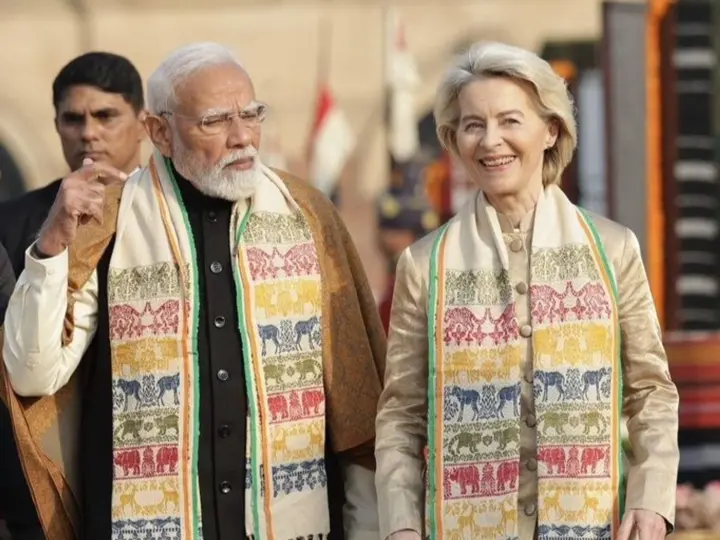
The European Union and India have reached a landmark free trade agreement, dubbed the "mother of all agreements," which provides for a significant reduction in tariffs on EU cars and wine, the European Commission reported on January 27, UNN writes.
Details
"The EU and India today concluded negotiations on a historic, ambitious and commercially significant free trade agreement, the largest such agreement ever concluded by both sides," the European Commission said.
The agreement, it is noted, "will strengthen economic and political ties between the world's second and fourth largest economies at a time of rising geopolitical tensions and global economic challenges, underscoring their shared commitment to economic openness and rules-based trade."
Europe and India are making history today. We have concluded the "mother of all agreements." We have created a free trade area for two billion people that will benefit both sides. This is just the beginning. We will develop our strategic relationship to make it even stronger.
– commented European Commission President Ursula von der Leyen on X.
The EU and India reportedly already trade goods and services worth over 180 billion euros annually. And the agreement is expected to double EU goods exports to India by 2032, eliminating or reducing tariffs on 96.6% of EU goods exports to India. Overall, the tariff reduction is expected to save about 4 billion euros annually in tariffs on European goods.
It is stated that India will grant the EU tariff reductions "that none of its other trading partners have received." For example, tariffs on cars will gradually decrease from 110% to 10%, while for car parts they will be completely abolished within five to ten years. Tariffs reaching 44% on equipment, 22% on chemicals, and 11% on pharmaceuticals will also be largely abolished.
The agreement, it is reported, also eliminates or reduces often prohibitive tariffs (averaging over 36%) on EU agri-food exports, opening up a huge market for European farmers. For example, Indian tariffs on wines will be reduced from 150% to 75% upon entry into force and subsequently to 20%, tariffs on olive oil will decrease from 45% to 0% within five years, and tariffs on processed agricultural products such as bread and confectionery will be abolished by up to 50%.
Sensitive European agricultural sectors will be fully protected, as products such as beef, chicken, rice, and sugar are excluded from liberalization in the agreement. All Indian imports will still have to comply with strict EU health and food safety rules.
In parallel, the EU and India are currently negotiating a separate agreement on geographical indications, "which will help traditional, iconic EU agricultural products sell better in India by eliminating unfair competition in the form of counterfeits."
On the EU side, as noted by the European Commission, the agreed draft texts will be published shortly. The texts will undergo legal review and translation into all official EU languages. The European Commission will then submit its proposal for the signing and conclusion of the agreement to the Council of the EU. After adoption by the Council of the EU, the European Union and India can sign the agreements. After signing, the agreement requires the consent of the European Parliament and a decision by the Council of the EU on its conclusion to enter into force. Once India also ratifies the agreement, it can enter into force.
India and EU prepare for free trade agreement with reduced tariffs on cars and wine26.01.26, 11:02 • 3658 views
The EU and India have also "launched a security and defense partnership," von der Leyen said.
"This is a platform for cooperation between independent parties on the most important strategic issues – from defense industry to maritime security. This is how reliable partners do it," she said on X.
"When two great democracies act together, we build stronger common security. It was a great pleasure to sign a new EU-India security and defense partnership with Subramanyam Jaishankar today," said EU diplomacy chief Kaja Kallas on X.
The pact, she said, "launches an annual security and defense dialogue – the first meeting will take place in a month – and deepens cooperation on maritime security, cyber issues, and counter-terrorism." "We will also consider India's participation in European defense initiatives," Kallas noted.
"As the world order changes, the EU will continue to deepen its diplomatic and economic ties around the world. Strong partnerships multiply our strength," said the head of EU diplomacy.