











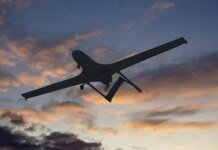



SpaceX implemented measures to block Russia’s unauthorized use of Starlink on attack drones targeting Ukraine, with Elon Musk announcing on Sunday that the steps proved effective following urgent outreach from Ukraine’s Defense Ministry.
Elon Musk shared the update on X, stating, “Looks like the steps we took to stop the unauthorized use of Starlink by Russia have worked. Let us know if more needs to be done.” This response addressed Ukrainian reports of Russian drones employing Starlink terminals to navigate deep into Ukrainian territory, evading electronic-warfare systems.
Ukrainian Defense Minister Mykhailo Fedorov confirmed on February 1 that the countermeasures yielded “real results.” He expressed gratitude to Musk, describing him as “a true champion of freedom and a true friend of the Ukrainian people.” The process initiated on January 29, when Fedorov’s ministry detected Russian drones using Starlink connectivity while flying over Ukrainian cities. Within hours, officials contacted SpaceX and proposed technical solutions, prompting a swift reply from the company.
Serhii Beskrestnov, an adviser to Fedorov on technology issues, explained that details of the countermeasures remain undisclosed publicly. He emphasized their purpose in safeguarding military and civilian infrastructure against enemy attack drones. Beskrestnov added, “I apologize again to those temporarily affected by the measures, but these are very important and necessary actions for the country’s security.” He characterized the actions as temporary, anticipating replacement by a “global, well-considered solution.”
The problem surfaced in late January upon examination of wreckage from downed Russian drones, which included Starlink terminals on models such as Shahed, Molniya-2, and BM-35 variants. Beskrestnov documented evidence from “hundreds” of attacks where these Starlink-equipped drones targeted civilian areas instead of military sites. The satellite internet enabled operators to circumvent Ukraine’s electronic countermeasures, which disrupt drone-guidance via GPS and radio-signal jamming.
Specific incidents underscored the threat. On January 27, a Starlink-enabled Shahed drone struck a passenger train in Kharkiv Oblast. The BM-35 drone model demonstrated capability for ranges up to 500 km, extending the reach of such precision strikes facilitated by Starlink connectivity.
SpaceX introduced speed restrictions as part of its response, deactivating Starlink terminals on devices exceeding approximately 90 km/h. This primarily impacts fixed-wing drones, while slower quadcopter-style drones retain functionality. Ukraine’s military depends on more than 50,000 Starlink terminals for essential battlefield communication and its own drone operations, presenting a complex technical challenge in isolating Russian unauthorized access without disrupting Ukrainian systems.
Featured image credit