








Baku military court sentenced former leaders of the unrecognized Nagorno-Karabakh Republic. Among them are the ex-president, commander of the armed forces, and other high-ranking officials.
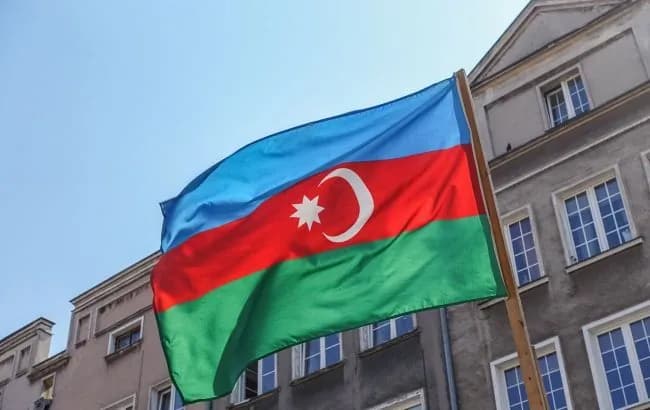
The military court of Azerbaijan's capital, Baku, has handed down sentences to former leaders of the "Nagorno-Karabakh Republic." Among them are a former president, commander of armed formations, parliament speaker, and foreign minister, UNN reports, citing Radio Free Europe's Azerbaijani service.
Details
Sentenced to life imprisonment were:
- former president of the unrecognized republic, Arayik Harutyunyan;
- former commander of the NKR army, Levon Mnatsakanyan;
- former deputy army commander, David Manukyan;
- former speaker of the NKR parliament, David Ishkhanyan;
- former head of the NKR Ministry of Foreign Affairs, David Babayan.
Two other former leaders of the "Nagorno-Karabakh Republic" – Arkady Ghukasyan and Bako Sahakyan – were sentenced to 20 years. At the time of the verdict, they were 65 years old: according to the Criminal Code of Azerbaijan, such individuals cannot be sentenced to life imprisonment.
In total, there are 15 defendants in the case, including Ruben Vardanyan, the state minister of unrecognized Nagorno-Karabakh. All of them were detained in 2023 after the territory of Nagorno-Karabakh came under Azerbaijani control.
In Baku, the defendants are accused, among other things, of preparing and waging an aggressive war, violating the laws and customs of war, genocide, financing terrorism, violent seizure of power, and murder.
Context
The conflict between Armenians and Azerbaijanis over Nagorno-Karabakh has continued since the collapse of the Russian Empire. Independent states emerged on its territory, including the Azerbaijan Democratic Republic, the Democratic Republic of Armenia, and the Georgian Democratic Republic.
In the early 1920s, the territories of the three Transcaucasian states were occupied by troops of Soviet Russia, and subsequently, the Transcaucasian Soviet Federative Socialist Republic was formed. In 1922, it became one of the founders of the Soviet Union along with other Soviet republics – the RSFSR, the Ukrainian SSR, and the Byelorussian SSR.
In 1936, the TSFSR disintegrated into separate Azerbaijani, Armenian, and Georgian Soviet republics. And although ethnic Armenians constituted the majority of the population in Nagorno-Karabakh, this territory remained under the control of Azerbaijan – first independent, and then Soviet.
In the late 1980s, when national liberation movements of peoples intensified in the USSR, the residents of Karabakh advocated for transferring from Azerbaijan to Armenia. The Azerbaijani leadership, as well as the central government of the Soviet Union led by Mikhail Gorbachev, opposed this.
The conflict between Azerbaijanis and Armenians escalated into hostilities after the collapse of the USSR. During the first war (1992-1994), Armenians managed to occupy Nagorno-Karabakh and several adjacent districts of Azerbaijan. Hundreds of thousands of people, mainly ethnic Azerbaijanis, became refugees and internally displaced persons.
The "Nagorno-Karabakh Republic" was not officially recognized by any UN country, including Armenia. In 1993, the UN adopted four resolutions demanding the withdrawal of Armenian military formations from Karabakh and recognizing the territory as part of Azerbaijan.
In the 2000s and 2010s, local armed clashes occurred in Karabakh, and in the autumn of 2020, a second full-scale war took place. At that time, Azerbaijan regained control over the areas around Nagorno-Karabakh and captured the ancient and symbolically significant city of Shusha (Shushi in Armenian – ed.). The day after the capture of Shusha, Armenian Prime Minister Nikol Pashinyan, Azerbaijani President Ilham Aliyev, and Russian President Vladimir Putin signed a statement on a ceasefire in Nagorno-Karabakh. Under the terms of the agreement, Armenia and Azerbaijan retained the territories where their troops were located at the time of signing the document. Russian "peacekeepers" were deployed along the line of contact.
In 2023, after the full-scale Russian invasion of Ukraine, Azerbaijan conducted a new military operation in Karabakh. It ended with the capitulation of the authorities of the self-proclaimed republic and the full establishment of Azerbaijani authority in the region. The absolute majority of the Armenian population left Karabakh.
Recall
Armenia and Azerbaijan initialed a peace agreement in the USA. The treaty provides for the rejection of territorial claims and the obligation not to resort to force.