
























Save StorySave this storySave StorySave this story
This week on Uncanny Valley, hosts Brian Barrett and Zoë Schiffer discuss the highlights from Nvidia’s annual developer conference, and why Tesla recently got in trouble with some of its most loyal fans online. Plus, Meta’s initial decision to shut down Horizon Worlds VR on the Quest headset signals the end of the metaverse dream. (Meta has since reversed course, saying it will keep the platform on limited support for the “foreseeable future.”)
Articles mentioned in this episode:
- Nvidia Is Planning to Launch an Open-Source AI Agent Platform
- The Tesla Influencers Leaving the ‘Cult’
- Meta Is Shutting Down Horizon Worlds on Meta Quest
You can follow Brian Barrett on Bluesky at @brbarrett and Zoë Schiffer on Bluesky at @zoeschiffer. Write to us at [email protected].
How to Listen
You can always listen to this week's podcast through the audio player on this page, but if you want to subscribe for free to get every episode, here's how:
If you're on an iPhone or iPad, open the app called Podcasts, or just tap this link. You can also download an app like Overcast or Pocket Casts and search for “uncanny valley.” We’re on Spotify too.
Transcript
Note: This is an automated transcript, which may contain errors.
Zoë Schiffer: Brian, hello. Very exciting to have another way to talk to you when I'm not pinging you on Slack every five seconds.
Brian Barrett: It's great, because Slack doesn't have the voice part.
Zoë Schiffer: It doesn't.
Brian Barrett: I will say: very sad that Leah won't be a part of that journey today.
Zoë Schiffer: I know. It is really sad, but when the Leah's away, the mice will play, and we will be talking about topics that Leah hates, so just wait.
Brian Barrett: And to be clear, she'll be back next week. She's just sick.
Zoë Schiffer: Yeah.
Brian Barrett: It's allergy season.
Zoë Schiffer: Welcome to WIRED's Uncanny Valley. I'm Zoë Schiffer, WIRED's director of business and industry.
Brian Barrett: I'm Brian Barrett, executive editor.
Zoë Schiffer: This week on the show, we're diving into Nvidia's annual developer conference, why some Tesla influencers are fleeing the brand, and why Meta has finally shut down Horizon Worlds on Meta Quest. So to start us off, this week, Nvidia had its annual developer conference in San Jose. This is the big event in the AI industry. Some people even call it the Super Bowl of AI. Developers go, CEOs, researchers, WIRED reporters—and we're all waiting to hear what CEO Jensen Huang is going to tell us about the future of the company.
Brian Barrett: One thing that's interesting about the Nvidia conference too, is I feel like so much of it is business facing. It's not a lot of stuff that you, as an AI consumer or someone who plays around with Claude, wouldn't necessarily connect with. One thing, with a grain of salt, because this is someone who stands to make this money, but Jensen did say the revenue opportunity for artificial intelligence chips just at Nvidia might reach at least a trillion dollars through 2027.
Zoë Schiffer: Pocket change.
Brian Barrett: Pocket change, I mean, really, for Nvidia at this point. One thing that was really interesting: He introduced a new product. I always like when there's an actual product tied to this rather than the promise of a product. A while ago, Nvidia struck a licensing deal with a company called Groq, not to be confused with the occasionally—
Zoë Schiffer: It's Groq with a “q.”
Brian Barrett: —Groq with a “q,” not Grok with an unconsensual undressing problem. So they're going to pair Nvidia's chips, which are good at processing AI, with Groq's chips, which have components that can put a charge into how Nvidia's chips operate. So basically that $20 billion licensing agreement is bearing fruit. It's going to make inference quicker, less expensive. It's going to make things more efficient basically for Nvidia customers.
Zoë Schiffer: Right. Yeah. I was talking to a bunch of people in the industry about this this week, and one thing they pointed out, which might be totally obvious to AI researchers, but was pretty not obvious to me, is that we actually haven't had specific chips for AI yet. They've been using general Nvidia chips for training and inference this entire time. And this is basically the first year where we are going to see specialized chips for artificial intelligence.
Brian Barrett: Well, and I'm old enough to remember—I know we joke about my age, but it's not that long ago—Nvidia got to where it is because it made GPUs for gaming PCs. The GPUs happened to be good at the things AI needed. So they kind of backed into this. So yeah, it is a big moment. But Zoë, we've said inference a couple of times so far. Go ahead and define it for folks so that we know everyone's on the same page about what we are talking about.
Zoë Schiffer: Yeah. OK. So if you're an AI researcher, you're like, yawn, this is boring. But it's not obvious to people outside the industry, so it's worth saying really clearly. There is the pre-training process where you let a model loose on the corpus of the internet, and it gobbles up all the data, and it learns from it. And then there's a process of you, as an AI consumer, asking a question to ChatGPT or Claude. The process of you pinging that question and getting an answer in return is what we think of when we talk about inference. And actually now, most of the investments that AI companies and big tech companies are making are being spent on inference, not pre-training.
Brian Barrett: Because they've already eaten up the entire internet.
Zoë Schiffer: And inference is just really expensive. Serving all of those customers in real time is a really expensive process.
Brian Barrett: Just for an example of how Jensen Huang talked about inference, there was a slightly bizarre AI animated music video that was displayed at the end of his speech. Let's listen to that.
Archival audio: Once upon an AI time / training was paradigm / short talking models how / but inference runs the whole world now / Vera showed us who's the boss / at 35 times less the cost / Blackwell makes the token sing / Nvidia, the inference king.
Zoë Schiffer: I sincerely hope that they used AI to make that and did not pay a marketing firm many millions of dollars.
Brian Barrett: Yeah. The quality is about what I would expect from AI. And just for folks, the references to Blackwell and Vera are references to various Nvidia products.
Zoë Schiffer: We also should say that Jensen announced NemoClaw, which was this enterprise platform for AI agents, basically like a secure enterprise version of OpenClaw.
Brian Barrett: It's fun to watch companies scramble. So you've got NemoClaw now from Nvidia. You've got the creator of OpenClaw, which then—what is the latest name for it?
Zoë Schiffer: Yeah, because it was Clawdbot, Moltbot, OpenClaw.
Brian Barrett: OpenClaw, great. So he's now working at OpenAI, and Meta has acquired Moltbook, right?
Zoë Schiffer: Right.
Brian Barrett: —the social network for AI agents. So everyone's scrambling to cover this and be on top of this, but it feels almost like, so that they can say that they are.
Zoë Schiffer: Yeah. I was going to say, I feel like you can almost hear the backroom conversations that are happening where Mark Zuckerberg needs to explain to his investors why they're actually going to be ahead of the curve on this, and like, "Wait, wait, wait, no, we're not being left behind." Because as soon as you see a trend pop up or one company doing something, they all try and replicate it as quickly as possible.
Brian Barrett: Yeah, which is why I'm working on my own AI agent social network. It's a small one. It's really centered on cooking. Anyway, it's a whole thing. It's going to be a whole thing. I also wanted to mention, I am a little bit obsessed with people's obsession with space-based data centers, and similar to what we're just saying about having to meet the moment and tell your investors where you're at. Nvidia also announced the Space-1 Vera Rubin Module to the GPU and computer that is built for space, or will be built for space because there's no actual timeline for development, but they've got their best people on it Zoë.
Zoë Schiffer: I love this. This is one of my favorite conversations to have with really smart researchers right now because people who understand physics immediately start sweating and swearing and talking about how the fuck are you going to cool a data center in space? They just get so upset about it. And I think people who actually know about this thing, it's completely farfetched. We're just so far away from being able to figure out how you would power and cool and operate these things. But again, it's a marketing ploy. And why is it a marketing ploy? Because a bunch of these companies are trying to go public. So I think we're going to see a lot of these, not Nvidia, but we're talking OpenAI, we're talking—
Brian Barrett: SpaceX.
Zoë Schiffer: —SpaceX. We're talking Anthropic at some point. And so I think we're going to see a lot of these kind of farfetched, big announcements pre-IPO.
Brian Barrett: And meantime, there is some actual real world happening right now competition going on. A lot of this is focused on future state stuff, but we do have—Nvidia chips are facing competition. Google making its own chips. Cerebras is a startup that is making chips that specialize in AI. We've seen Meta having its own adventures. Yeah.
Zoë Schiffer: I was going to say, a bunch of these companies, like OpenAI and Meta, are actually working with third parties to design custom chips. So I think Nvidia is having to defend its place as the leader of this entire industry in a way it really hasn't had to for many, many months, if not years. Jensen Huang knows that and is making moves to, again, defend its position. Like do I see Nvidia falling way behind or having to really worry about its business in the near future? No, I do not. Do you think?
Brian Barrett: No, I don't think so. I think it's more what shape we're in that we've got all of our chips in this particular—
Zoë Schiffer: All of our GPUs in this particular data center.
Brian Barrett: Yeah. Oh, wow.
Zoë Schiffer: I know.
Brian Barrett: OK. Speaking of failures, let's turn our attention to Tesla. And I say that—don't be mad, Tesla.
Zoë Schiffer: Wow.
Brian Barrett: No. OK. There are Tesla fans—
Zoë Schiffer: Oh my gosh, in the pocket of BYD.
Brian Barrett: I am big BYD over here. No, not Tesla generally, but Tesla did get in some trouble recently. I'm specifically talking about, they had offered a limited time deal to transfer its "lifetime full self-driving service to new vehicles." We'll just say it's not really full self-driving. That terminology is controversial in and of itself. People were excited about the fact that they could just pay once and have it forever because it is pretty expensive. But then Tesla rolled that back. They changed the language of the agreement, saying that you need to have their new vehicle delivered by March 31st in order to swap their full self-driving from their last vehicle to the next one. That's a tall order for people. So people have been upset. I think people who are traditionally Tesla ride-or-dies, and they have a very vocal community who will probably come at me for saying connecting Tesla with the word failure, but they're starting to turn on Tesla themselves. There's a growing community of former Tesla fanatics and influencers who have started distancing themselves from the brand, which I think is interesting. And it's distinct from the sort of broader consumer pullback from Tesla that we've seen in the UK and Europe in particular, but also in the US, people not fans of Elon Musk politics. These are Elon Musk fans who are saying, "We're kind of over this."
Zoë Schiffer: I think this is fascinating because we all know that Tesla's stock price has often outpaced its business fundamentals. And part of the reason for that is that Elon Musk has specifically cultivated a rabid fan base that buy Tesla's stock kind of no matter what. It's one of the most widely held retail stocks on platforms like Robinhood. And so if you're in it for Elon Musk, maybe the business goes through its ups and downs, but you're going to stick with the company no matter what, which it gives him a lot of personal power. If we're seeing, again, and this might not be a widespread phenomena among the fan base right now, but even some big name people here and there who are really, really pro Tesla turn, I think that that's actually a really big problem for him.
Brian Barrett: How big a problem is it, Zoë? Because I agree with your point, but increasingly, Elon Musk is saying, "We're not even really a car company anymore." We are a humanoid robot company and a robotaxi company. Sorry. I always forget the robotaxi part, even though that's the part that's actually the closer to being real. So is there a world in which none of this actually matters because you know what: We've got optimist robots, and we've got a fleet of self-driving Teslas and that's really what the future is? That's what the stock price is based on.
Zoë Schiffer: Yeah, it might not. And again, I think Musk is first and foremost an excellent marketer and an excellent storyteller. And so if the story he's telling now is that we're not a car company, we're a robot company and people buy that, then sure. But I think the point that we're making is that a lot of these people aren't necessarily Tesla car fans in a vacuum. They're Elon Musk fans, and he happens to make this vehicle. And so then they choose the vehicle as the thing that they're going to be obsessed with and pump and talk about on X all the time. Maybe that transfers, but I think if his popularity among the fan base is waning, if he is doing things to kind of ostracize his own community, then I think that's an issue. And I think that this started to happen with some people when he started getting into politics. I talked to a couple of people for that Cybertruck story last year who said, "I love this car, but it's a bummer to go out in public and be a lightning rod. I didn't get it because I necessarily want to tell everyone I support the Trump administration. And he didn't really give us a choice because he started getting involved with Trump and DOGE. And all of a sudden when I drove this car around, people were yelling and screaming at me and kind of trying to drive me off the road."
Brian Barrett: And if you haven't read Zoë's Cybertruck photo essay from last year, please do. She interviewed a bunch of Cybertruck owners who said some fascinating things, including one guy whose quote—I'm going to get it slightly wrong—but it is printed in my brain indelibly, "Women don't like the car."
Zoë Schiffer: “Women don't like the vehicle.”
Brian Barrett: Women don't like the vehicle. Women don't like the vehicle. So in terms of Tesla owners who are turning around, Zoë, there—I think you have feelings about this, or I know you do because you've expressed them before—but I'd like you to express them on the podcast. How do we feel about people who, they're driving a Tesla, they bought it before all this, they have a Tesla, and they have a bumper sticker on there now that says, "I bought this car before Elon went crazy or some such." How do we feel about these people, Zoë?
Zoë Schiffer: I'm so glad you teed this up for me. I feel bad. I think this is embarrassing. I feel like you have two options. Either you drive your Tesla loud and proud, you don't put a damn sticker on it, or you sell your car, get a different electric vehicle. They're not even the nicest cars on the market. I am genuinely confused. But the virtue signaling—which, I live in the Bay Area, so I see these cars everywhere. I'm just like, "You guys, this is the middle road, and it is the worst one to take. Choose a different option."
Brian Barrett: Fewer options than ever, though. Honda had three EV models planned for the US. They've canceled them. There are fewer options than ever. A lot of US manufacturers are backing away from it. So we are in sort of a weird place where Tesla is increasingly one of the diehards in this space.
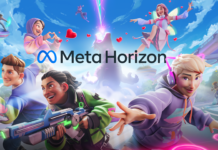
Here's a different choice that Meta made this week. Meta announced on Tuesday that starting March 31st, Horizon Worlds will no longer be available in the Quest store, and then it's going to be shut down entirely on June 15th. Horizon Worlds is Meta's metaverse play. It's this world that they created that's supposed to be the showcase for the metaverse. And the way to experience it, if you are really committed to VR, is going to be the Meta Quest headset. You'll still be able to access it on your phone, but that's not really a metaverse. That's just a verse, I think, at that point.
Zoë Schiffer: Right. Yeah. Huge bummer that they changed the entire name of the company to be about this product.
Brian Barrett: Incredible.
Zoë Schiffer: Incredible choice.
Brian Barrett: And I'd say less than five years ago. I looked that up when the news came. It's four and a half years ago.
Zoë Schiffer: Look, Meta poured an absolute ton of money into this. And I think if you talk to executives and other true believers, they will say, "We were simply too early. This could still happen someday. That ready player world vision of the future could come to pass." But yeah, I think now they're seeing like, wow, the actual thing that came to pass is that AI ate everyone's lunch. And so they're trying to play catch up there. And we still have yet to see what's coming from all of the money that they've poured into their new AI labs that Alex Wang is running.
Brian Barrett: I want to talk about AI, but I want to stick with metaverse a little bit too. You mentioned a ton of money. Reality labs reportedly lost $77 billion—
Zoë Schiffer: So painful.
Brian Barrett: —over four years or whatever. And I guess that's the idea. You just keep making bets and some of them will be bad. Do you want to hear my unifying theory about consumer technology?
Zoë Schiffer: I absolutely do, yes.
Brian Barrett: It's not very good, but it is everything is 3D TV until proven otherwise.
Zoë Schiffer: OK. I'm going to need you to unpack that a little bit.
Brian Barrett: So back when 3D TVs were a big thing, there was a period of like two years when every TV company was saying 3D TV is the next big thing. People love this. Everyone's going to want one. You could not buy a high-end TV that did not have 3D baked in. Every TV that was high end, it came with like six pairs of 3D glasses. So for two reasons, everything to me is 3D TV improvised. One, companies will insist that something is the future despite all available evidence until they lose $77 billion and have to sort of capitulate. So never believe what companies are saying in the future. And two, people don't like to wear things on their faces.
Zoë Schiffer: Right.
Brian Barrett: So the metaverse, unfortunately, and Horizon Worlds checked both of those boxes, it was a thing that on its face was not going to be fun and created more separation than unity, which is Facebook's whole thing. It's like bringing people close together. Well.
Zoë Schiffer: I would say it has not done that either. But I just think that this vision of the future where everyone sits in their little individual houses with their headsets on interacting with virtual avatars of their friends and family or strangers or whoever is—I mean, I hate to get on a moral high ground, but I guess this is one that I actually feel strongly about; I think that is such a grim, tragic vision of the future. And it's one that clearly did not resonate widely with people.
Brian Barrett: So back to the AI part, not to bounce around, but Meta and other companies are making an even bigger bet on AI. It is tempting to have a sort of déjà vu moment, where it's like they're all saying this is the future, hundreds of billion dollars data center buildouts, sort of dwarfing the amount that reality labs ended up losing. What's the difference here though, Zoë? Why is AI different from Horizon Worlds or the metaverse? Why is AI not 3D TV?
Zoë Schiffer: I guess I find it a little difficult to compare those two technologies. I think AI is kind of like an innovation that you can build a lot of other things with. You're not necessarily locked into one platform. It's like a new paradigm in that way. Whereas, with the metaverse, sure, you could build games and other experiences within this universe, but ultimately you were buying into Meta's platform and this vision for the world. You don't need to necessarily buy into a new vision for the world to build with AI. You can build B2B products, you can build consumer tech products, you can build immersive world products, but you could also just build a new payments platform. I think there's a broadness that makes it more viable.
Brian Barrett: It's almost more of a service. And I think even more importantly, it is something that people have proven to get use out of. There is already how much that use is worth and whether it's worth all this investment ultimately and all that. Those are still questions that have to be answered. But AI is good at a lot of stuff. It has sort of passed that first hurdle of, does anyone actually want this? Yeah, a lot of people actually want this, and it also doesn't make you wear anything on your face for the most part. So, so far, feeling pretty good. Again, whether it's worth all of the money that's going into it and all of the other societal effects and stuff is a separate question.
Zoë Schiffer: Yeah. But I think just the simple question of, is it helping you do something you already do, but making that thing better and easier? Just for me personally, what I used to Google, I now often will ask ChatGPT. It's not perfect. You definitely still need to fact-check it. But in terms of a search engine, I think the experience is far superior as long as you know what you're dealing with. With Meta, there was no, "Oh, I'm looking at a tiny screen in my home and would like to look at a more immersive screen." It was asking you to do something entirely new and different. And that new and different thing did not appeal to me or apparently to many other people.
Apple made a really big bet on headsets too, and that bet also felt like it really did not pay off. And I think that's another version where it's like, in order for that to work, in order to completely change the computing paradigm, it needed to do what you can do on a laptop so much better. And frankly, it just didn't. There were cool things, like watching a movie and it was very high definition or whatever, but it is just genuinely easier to use your laptop and phone than it was to use those headsets and kind of wave your hands around in the air like Apple wanted you to.
Brian Barrett: I like that we, and I fully endorse this, talk about the Vision Pro in the past tense.
Zoë Schiffer: I know.
Brian Barrett: Even though—
Zoë Schiffer: Wait, are they still shipping them out?
Brian Barrett: —you can still try one. Yeah. They updated it a few months ago in a very small way.
Zoë Schiffer: Oh, my God.
Brian Barrett: You can still try one on at the Apple Store, I think. They're still out there.
Zoë Schiffer: That's amazing.
Brian Barrett: Coming up after the break, we're going to share our WIRED/TIRED picks for the week. Stay with us.
Zoë Schiffer: It's time for our WIRED/TIRED segment. Whatever is new and cool is WIRED, whatever passé thing we're over is TIRED. Brian.
Brian Barrett: So I have more of a TIRED, and it relates to wearing things on your face, believe it or not. Bear with me for one second. Over the weekend, I went with my family to something called The Great Big Game Show.
Zoë Schiffer: Wow.
Brian Barrett: It is really fun. You get a group of people together, and you go, and it's an experiential thing where you play a bunch of game show games against another group of people. There's a human host there running the games. It was a great time. So I guess my WIRED is Great Big Game Show.
Zoë Schiffer: Wow. So wholesome fun.
Brian Barrett: Go check it out if there's one near you. It was great. I went with my kids and my wife. And my TIRED is: I noticed at the start of the thing that the other group that we were competing against who were lovely people, really, really fun, glad we got them as a group, but a guy in the group was wearing his Meta Ray-Bans and was recording most of the thing.
Zoë Schiffer: Wow.
Brian Barrett: And he wasn't doing it maliciously. It was just like, "This is a fun thing. I'm going to capture some content for it. " But it really kind of, I think, especially because my kids were there, didn't love it and felt pretty uncomfortable and kind of took away from the whole experience. And I'll say too, later that night, I asked my family, I was like, "Hey, did anyone notice, by the way, that we were being recorded for big chunks of time during that thing?" None of them had any idea. They wouldn't even know how to know.
Zoë Schiffer: No, ignorance is bliss.
Brian Barrett: Yeah. And Meta Ray-Bans have this little indicator light, but it is very muted. You have to know to look for it. So this is a little bit of a cliche, but I will say, TIRED is being a Meta Ray-Ban owner and not being conscientious about who you're recording and in what context. I know there are several worst examples of this out there in the world, so not saying that—and it was ultimately fine. We had a great time. But just think before you Ray-Ban.
Zoë Schiffer: Yeah. I don't like that. I actually have a pet peeve of when friends send you pictures of someone on the bus or subway or whatever doing something weird. I'm always like—
Brian Barrett: Don't do that.
Zoë Schiffer: —I don't love it. The bar for taking a picture of someone in public just living their life is so sky-high in my opinion. Otherwise, you're just being an asshole. Let people live.
Brian Barrett: Yeah, 100 percent. Zoë, what about you?
Zoë Schiffer: OK. My TIRED is obvious, and I think everyone agrees with me, it is mansplaining. I am over it. I feel like men have taught me all they have to teach me in this life. And even listening to my absolute favorite All In podcast, I've grown a little weary, I have to admit. I'm just like, it's a lot. I had someone explain Elon Musk's Twitter takeover the other day, and I was like, "If there's one topic I know a lot about, it is this. I don't need you to tell me actually anything."
Brian Barrett: Zoë has literally written the book on Elon Musk's Twitter takeover.
Zoë Schiffer: This person did not know that, but I was just like, "Goodbye." My WIRED is me explaining to my husband about his favorite topic, which is early frontier tales.
Brian Barrett: Oh.
Zoë Schiffer: He likes reading American history books. Yes. And I read Lauren Groff's The Vastar Wilds recently—literally blew my mind. I think she is such an absolute genius.
Brian Barrett: Oh, she's amazing. She's terrific.
Zoë Schiffer: As someone who has never read about this period of time, I was like, "Andrew Collins, have you heard how difficult it was to be an early settler in this country or before the country existed?" And he was like, "I cannot believe you're trying to tell me about this." But I couldn't shut up about it for two days. It stayed with me. I call it The Road for Women. I felt like it was like Cormac McCarthy's The Road, but for girls, maybe. Oh, my God. Pour my heart.
Brian Barrett: She has a relatively new, I think, short story collection that you should also check out.
Zoë Schiffer: Yeah, I know. I'm not a huge short story person, but I do feel like I love her, so maybe this will be my foray into it. That's our show for today. We'll link to all the stories we spoke about in the show notes. If you have any comments, you can find the episode transcripts at wired.com to discuss. Uncanny Valley is produced by Kaleidoscope Content. Adriana Tapia produced this episode. It was mixed by Amar Lal at Macro Sound. Mark Leyda is our San Francisco studio engineer. Kimberly Chua is our digital production senior manager. Kate Osborn is our executive producer, and Katie Drummond is WIRED's global editorial director.