
























AMD took center stage at CES 2026 with a comprehensive presentation led by Chair and CEO Dr. Lisa Su, outlining a strategy to power AI across every facet of technology. From massive data center infrastructure to embedded edge devices and high-performance gaming rigs, the company showcased its “end-to-end” leadership. The event highlighted major advancements in silicon, including the new Helios rack-scale platform, embedded Ryzen processors, and the next generation of gaming CPUs, solidifying AMD’s role in the “AI everywhere” era.
1. AMD introduces Ryzen AI Embedded processor portfolio
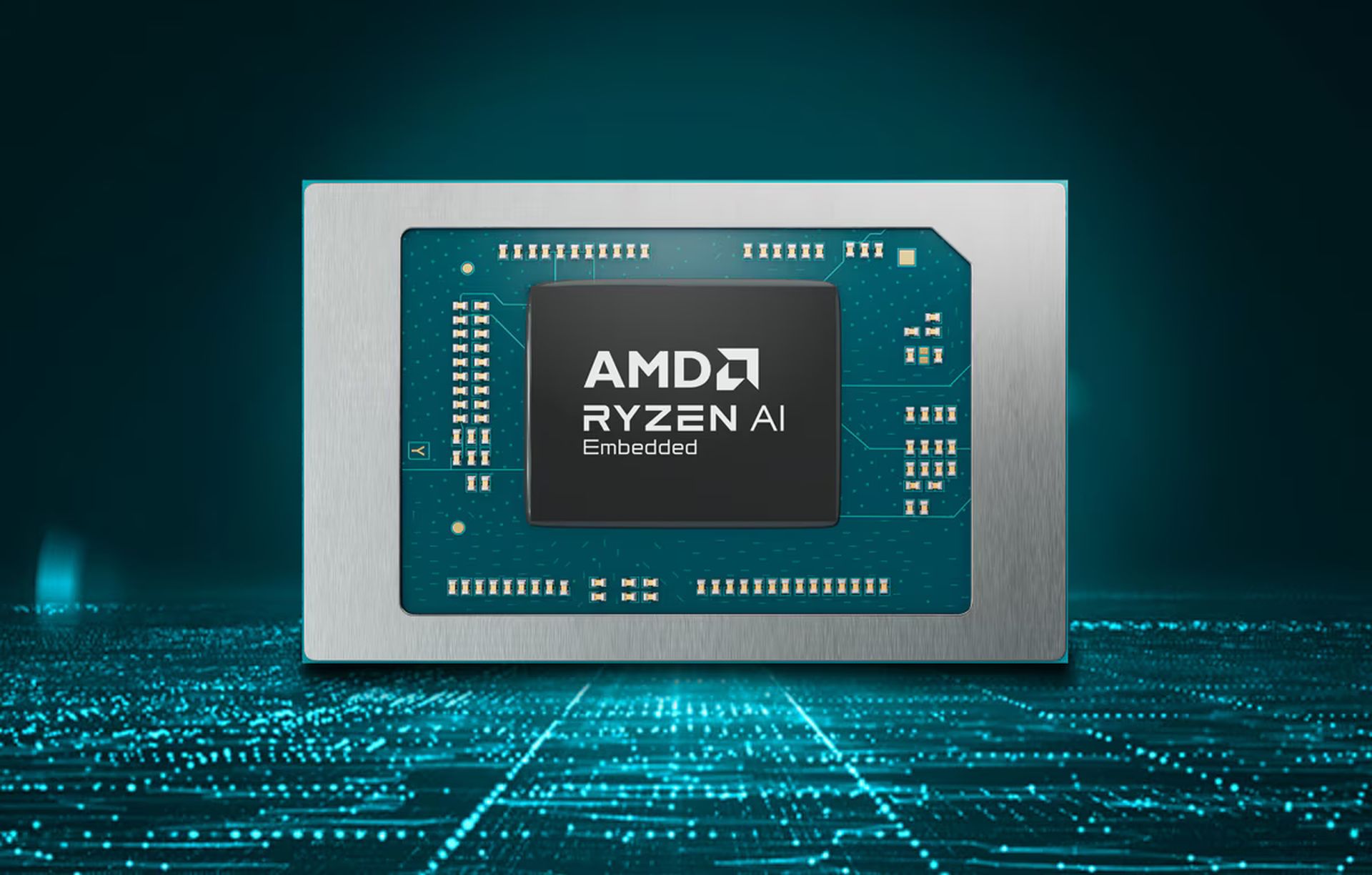
AMD kicked off its announcements with the launch of the Ryzen AI Embedded P100 and X100 Series processors. These chips are specifically engineered to power “physical AI” applications at the edge, such as automotive digital cockpits, industrial automation systems, and even humanoid robotics. The portfolio combines high-performance “Zen 5” CPU cores with RDNA 3.5 graphics and an XDNA 2 NPU into a single, compact BGA package.
The P100 Series, launching immediately, is optimized for harsh, space-constrained environments ranging from -40°C to +105°C. By integrating the NPU directly on the chip, AMD allows industrial and automotive manufacturers to process AI workloads—like voice recognition or gesture control—locally with low latency. This integration eliminates the need for discrete accelerators, reducing system complexity and power consumption for 10-year lifecycle products.
2. New Helios platform defines the blueprint for yotta-scale AI
In the data center, AMD unveiled the “Helios” rack-scale platform, which it describes as the blueprint for the coming era of “yotta-scale” computing. As AI models grow to trillion-parameter scales, infrastructure needs to evolve beyond individual servers. Helios delivers up to 3 AI exaflops of performance in a single rack by unifying the new AMD Instinct MI455X accelerators with AMD EPYC “Venice” CPUs.
This modular system addresses the critical bottleneck of networking bandwidth by integrating AMD Pensando “Vulcano” NICs. Dr. Lisa Su emphasized that this architecture allows for the scaling required to train the world’s largest models, combining leadership compute engines with a high-speed, open network fabric that can evolve across product generations.
3. Instinct GPU portfolio expands with MI440X and MI500 preview
Alongside the Helios platform, AMD expanded its accelerator lineup with the AMD Instinct MI440X GPU. Designed specifically for enterprise AI deployments, this chip brings scalable training and inference capabilities to on-premises data centers in a compact, eight-GPU form factor. It joins the recently announced MI430X to offer a full range of solutions for scientific and sovereign AI workloads.
AMD also provided a forward-looking preview of the next-generation Instinct MI500 Series GPUs, scheduled for release in 2027. Built on the future CDNA 6 architecture and advanced 2nm process technology, these chips are projected to deliver a massive 1,000x increase in AI performance compared to the MI300X. This roadmap underscores AMD’s commitment to maintaining performance leadership in the highly competitive AI accelerator market.
4. AMD commits $150 million to AI education and community
Highlighting the social impact of technology, AMD announced a significant $150 million commitment to bring AI resources into classrooms and communities. This initiative is part of the broader “Genesis Mission,” a public-private partnership aimed at securing U.S. leadership in AI and scientific discovery.
Joined on stage by the Director of the White House Office of Science and Technology Policy, Dr. Lisa Su emphasized the importance of preparing the next generation for an AI-driven future. The pledge focuses on expanding access to hands-on learning opportunities and compute resources, ensuring that the benefits of high-performance computing are accessible to students and researchers across the country.
5. Ryzen AI 400 and PRO 400 Series launch for Copilot+ PCs
Moving to client computing, AMD introduced the Ryzen AI 400 and Ryzen AI PRO 400 Series processors. These chips are built to power the next wave of “Copilot+ PCs,” meeting Microsoft’s strict requirements for local AI performance. With an NPU capable of up to 60 TOPS, they exceed the industry standard, ensuring snappy performance for local AI tasks.
For enterprise customers, the PRO 400 Series combines this AI capability with AMD PRO Technologies. This suite offers multilayered security, streamlined manageability for IT departments, and long-term platform stability. These processors are designed to modernize business fleets, providing the reliability enterprises need while unlocking new AI-driven productivity features in Windows.
6. Ryzen AI Max+ brings workstation power to ultra-thin laptops
AMD unveiled the Ryzen AI Max+ 392 and 388 processors, designed to blur the line between ultra-thin laptops and powerful workstations. These chips feature a unified memory architecture that supports up to 128GB of memory, a critical feature for creators and developers working with massive AI models.
By combining “Zen 5” cores with Radeon 8060S graphics and the XDNA 2 NPU, the Max+ Series allows users to run large language models (up to 128 billion parameters) locally. This capability enables on-device content creation and development workflows that previously required connection to the cloud, all within a portable form factor that doesn’t sacrifice battery life.
7. Ryzen AI Halo developer platform reimagines the mini-PC
To further support the AI ecosystem, AMD launched the Ryzen AI Halo, a dedicated developer platform packed into a mini-PC form factor. Powered by the new Ryzen AI Max+ silicon, this device is purpose-built to help developers build and deploy AI applications at the edge.
The Halo platform offers an out-of-the-box experience optimized for the AMD ROCm software stack, supporting both Windows and Linux. With the ability to run models up to 200 billion parameters locally, it democratizes access to high-performance AI development tools, giving coders a powerful, cost-effective alternative to cloud-based instances for testing and inference.
8. Ryzen 7 9850X3D sets a new standard for gaming performance
For the gaming community, AMD announced the Ryzen 7 9850X3D, claiming the title of the world’s fastest gaming processor. Building on the success of the 9000X3D series, this new chip leverages second-generation AMD 3D V-Cache technology and “Zen 5” architecture to deliver ultra-low latency and high frame rates.
With a boost clock 400MHz higher than its predecessor and a massive 104MB of total cache, the 9850X3D is optimized specifically for the demands of modern gaming engines. AMD benchmarks suggest it outperforms the competition by up to 27% in select titles, offering enthusiasts a significant upgrade path that prioritizes pure gaming performance above all else.
9. ROCm software and FSR Redstone enhance the ecosystem
Rounding out the announcements, AMD introduced major updates to its software stack. The open AMD ROCm 7.2 software now supports the new Ryzen AI 400 Series processors and integrates directly with tools like ComfyUI, making it easier for developers to leverage AMD hardware for generative AI on both Windows and Linux.
On the graphics front, AMD released “FSR Redstone,” the latest update to its FidelityFX Super Resolution technology. Now available in the Adrenalin Edition driver, Redstone utilizes machine learning for frame generation and upscaling, delivering sharper visuals and smoother gameplay. Additionally, a new “AI Bundle” feature simplifies the installation of local AI tools, allowing users to easily set up chatbots and image generators on their PCs.