


























Have You Ever Thought About How We Find Things In Space Without Actually Going There?
These days, we are hearing a lot about space. Satellites, rockets, moon missions, and now even private companies are sending things up.
But the main thing is, how do we manage all this?
How do scientists keep track of so many things flying around?
That’s where Artificial Intelligence, or AI, is helping in a big way. Earlier, everything had to be checked manually, but now with AI, it’s becoming faster and easier.
Let’s talk about how AI is being used in space work, especially in watching and tracking things like satellites, space junk, and even asteroids. And don’t worry, we’ll keep it all very simple.
What Is AI Doing In Space?
In simple words, AI is helping scientists make smarter decisions by giving accurate results without wasting time. In space missions, every small detail matters. Even a tiny mistake can make a big difference. With AI, many tasks are now done by machines that can learn and improve.
In the past, scientists had to sit and check each signal, run all the calculations, and look at the sky through large machines. Now AI can handle many of those tasks. It studies data, finds patterns, and gives suggestions that save time and energy.
How Does AI Help With Satellites And Space Objects?
Right now, there are thousands of satellites moving above Earth. Some are working, some are not. Apart from that, there are a lot of old parts and pieces, also called space debris. If they crash into a working satellite, it can cause big issues. So tracking all of them is very important.
AI systems can now scan and follow the path of these objects. It can also predict if any satellite is going to collide with something. That way, space agencies can make changes to the satellite’s path before anything happens.
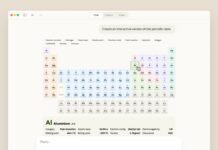
There are also smart tools that track moving objects in space. One useful online platform is Orb, which helps in tracking orbital paths. It uses real data to find out where an object might be at a given time.
This kind of tool works even better when combined with AI because AI can look at past data and give better predictions.
AI Helps In Planning Space Missions
When any space mission is planned, for example, sending a rover to Mars or launching a new telescope, there are hundreds of steps involved. From choosing the right time to launch to finding the safest path through space, everything needs deep thinking.
AI helps in doing simulations. That means it creates a model of the mission on a computer and shows what can happen at every step.
This way, scientists can see problems before they happen and fix them in advance. It saves both money and time. For example, AI helped in the Mars Rover missions by guiding the robot on where to move and how to avoid rocks.
Finding New Planets And Stars
One of the most exciting uses of AI is in finding new planets. Telescopes send a lot of pictures from space. But going through each image manually takes years. Now, AI programs can go through millions of images and find small changes that may show a new planet or star.
NASA has used AI to find planets outside our solar system. These planets are called exoplanets. AI looks for patterns in the light and tells if a planet is passing in front of a star. That’s how they find out something new is there.
Helping Astronauts On Space Stations
Astronauts live in the space station for months. They need support for communication, health, and daily tasks. AI tools are now being used like assistants. For example, some systems remind astronauts about tasks, help in medical checks, and even suggest solutions when something is not working.
Tracking Asteroids And Avoiding Danger
Even though we said we won’t talk about anything scary, it’s still important to know that AI helps in tracking asteroids. The idea is not to talk about danger, but how technology helps keep everything safe.
AI keeps an eye on the sky and checks if any large objects are moving toward Earth. It gives early alerts, so that space agencies can study it and decide if anything needs to be done. With more AI tools coming in, this tracking is becoming faster and more accurate.
AI Also Supports Education And Training
AI is not only helping scientists but also students and young learners. There are simulations and AI programs that help people understand how rockets fly, how gravity works, or how planets move. These tools are now being used in schools and training centers.
Also, space agencies are using AI to train new scientists. For example, before a person becomes a mission controller or an astronaut, they need to practice many situations. AI helps in that by creating realistic training situations.
What’s Next For AI In Space?
Looking ahead, AI will continue to be a big part of space work. It may help in building things on the moon or Mars, guide robots in space mining, or even support long-term human missions to other planets. AI will also keep improving the way we study stars, galaxies, and black holes.
There is also work happening where AI might help in building smart satellites that can repair themselves or adjust their path without waiting for human instructions.
Conclusion
So next time someone talks about space, you’ll know that AI is doing a lot of the work behind the scenes. From tracking space objects using tools like Orb to helping astronauts and finding new planets, AI is making space work more efficiently, faster, and better.