




















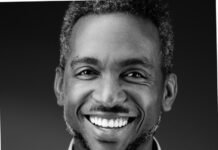

Courtesy of Rachelle Hruska
- When Rachelle Hruska founded the clothing line Lingua Franca, she had no intention of making it political.
- But the brand has since taken a stance on numerous causes, including, most recently, against ICE.
- She's lost business because of it, though she says it's worth it. Here's why.
This as-told-to essay is based on a conversation with Rachelle Hruska, the founder of clothing brand Lingua Franca. It has been edited for length and clarity.
When I started Lingua Franca, it wasn't meant to be a business. I was running another company and took up embroidery to get out of my brain. I was suffering from postpartum, and a therapist suggested I do something with my hands.
I had an old sweater lying around, embroidered "booya" on it — my two-year-old son's suggestion — and Instagrammed it. Soon, friends were asking me for sweaters.
Then in 2016, I got a call from Net-a-Porter. It really wanted to launch a line with us. I worked like mad to build a cashmere supply chain and hire embroiderers, and we officially launched in September of that year.
At first, it was not political at all. We started with phrases related to my muse, my mother-in-law, Janet McPherson, who was a single mom, the oldest woman surfer, and lived on her own terms.
Then, when Trump was elected in 2016, we were devastated. I needed a gift for Anna Carter, Graydon Carter's wife. At the time, Graydon was in a very public argument with Trump. I decided to have "I miss Barack" embroidered on the sweater, posted a photo, and it went totally viral.
Then, one of the first things Trump did as president was to block citizens of certain countries, including Iran, from coming into the US. At the time, two of the people stitching for me were Iranian students who couldn't get home because they wouldn't be able to return.
I thought, "This is so messed up." I posted the "I miss Barack" sweater and said $100 from every sweater would be donated to the American Civil Liberties Union. I will never forget that weekend. We got so many orders through email and DM. We raised $100,000 for the ACLU in one weekend, and that was the spark. I felt like my life had meaning.
Tom Hanks talked about us on TV. Connie Britton wore one of our sweaters to the Golden Globes. We didn't have any PR; we didn't advertise. Every single celebrity was buying it for themselves.
From that moment on, we began collaborating with organizations. We opened a store on Bleecker Street in Manhattan and had panelists come in. It's not always anti-Trump. We are intentional and pick and choose who we work with. We've raised money for Planned Parenthood, Margaret Atwood did a book event with us, and we partnered with the Whitney Museum.
Courtesy of Rachelle Hruska
Right now, PBS is a big one. I feel really good about sending a big check to PBS every quarter. Could I do that for five different causes in a quarter? No, we wouldn't be in business.
I don't want to be a political brand — we have a whole line of ready-to-wear clothes and collaborated with everything from "Wicked" to the Westminster Dog Show. I would love to just design beautiful clothes, but I can't not say anything.
Soon after ICE entered Minneapolis and Renée Good's killing, we posted on Instagram designs for sweaters with the sayings "melt ICE" and "I like my ICE crushed." We encouraged our followers to speak out and donated a percentage of the proceeds from the sweaters to Minnesota's Immigrant Rights Action Committee.
Less than a week later, a store emailed us to say it would no longer carry Lingua Franca because of my political views. I didn't even get back to that store — it's just not worth it. I'm not upset about the loss of business, but rather the message behind it.
Courtesy of Rachelle Hruska
Backlash comes with the territory
It's not the first time the brand has received pushback.
There are people and stores that don't want to buy us or be associated with us. We've been in talks with big retailers to collaborate, who would have added a lot of money to our bottom line, but they bowed out because we are political.
I've been called woke. The brand has been called performative. We've been accused of making money off a tragedy. I've seen it all. I've been called every name in the book from every side.
I am so beyond caring. I know in my heart that my intention is to make the world better, and we've been consistent about it. It might sound trite, but you can look at our bottom line and see we are doing this because we really want to raise money and start conversations — about how to help and what actions to take.
I think a lot of leaders are afraid to speak out because they're worried about being called woke or performative, but nothing will change unless people say, "This is wrong."
I'm going to continue doing what I've been doing for 10 years, and some people will celebrate it, some won't. That's OK, because I can sleep at night. I have worn my heart on my sleeve — on my chest, literally.
I'm using brands like Patagonia and Ben & Jerry's as my models. I'm so frustrated with business leaders who let what's happening happen; people forget how much power they have.
Read the original article on Business Insider