

























Archaeologists in Turkey have found a 3rd-century fresco depicting Jesus among goats. This is the only known example of early Christian art outside of Italy.
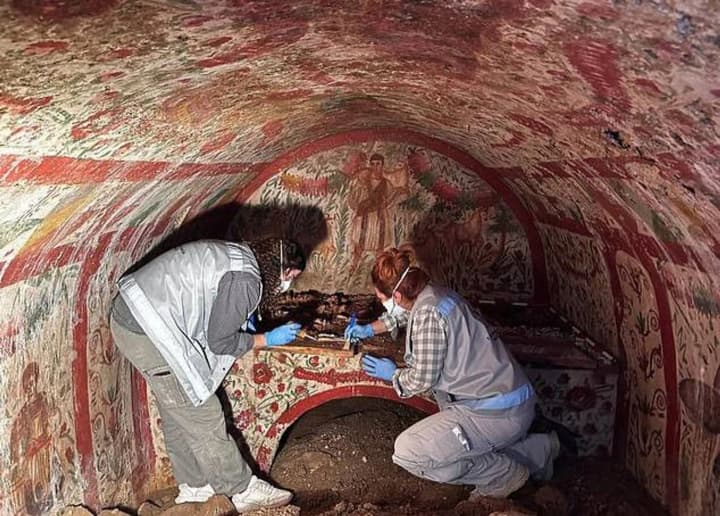
Archaeologists in Turkey have discovered a unique 3rd-century fresco depicting Jesus as the Good Shepherd in an underground tomb near Iznik. The discovery is considered an exceptional example of early Christian art and important evidence of the transition from pagan beliefs to Christianity in Anatolia. This is reported by the publication Daily Mail, according to UNN.
Details
Archaeologists have discovered a vibrant 3rd-century fresco on the wall of an ancient underground tomb in Turkey, depicting Jesus among goats in a field. He appears as a young, beardless man in simple clothing, carrying a goat on his shoulder.
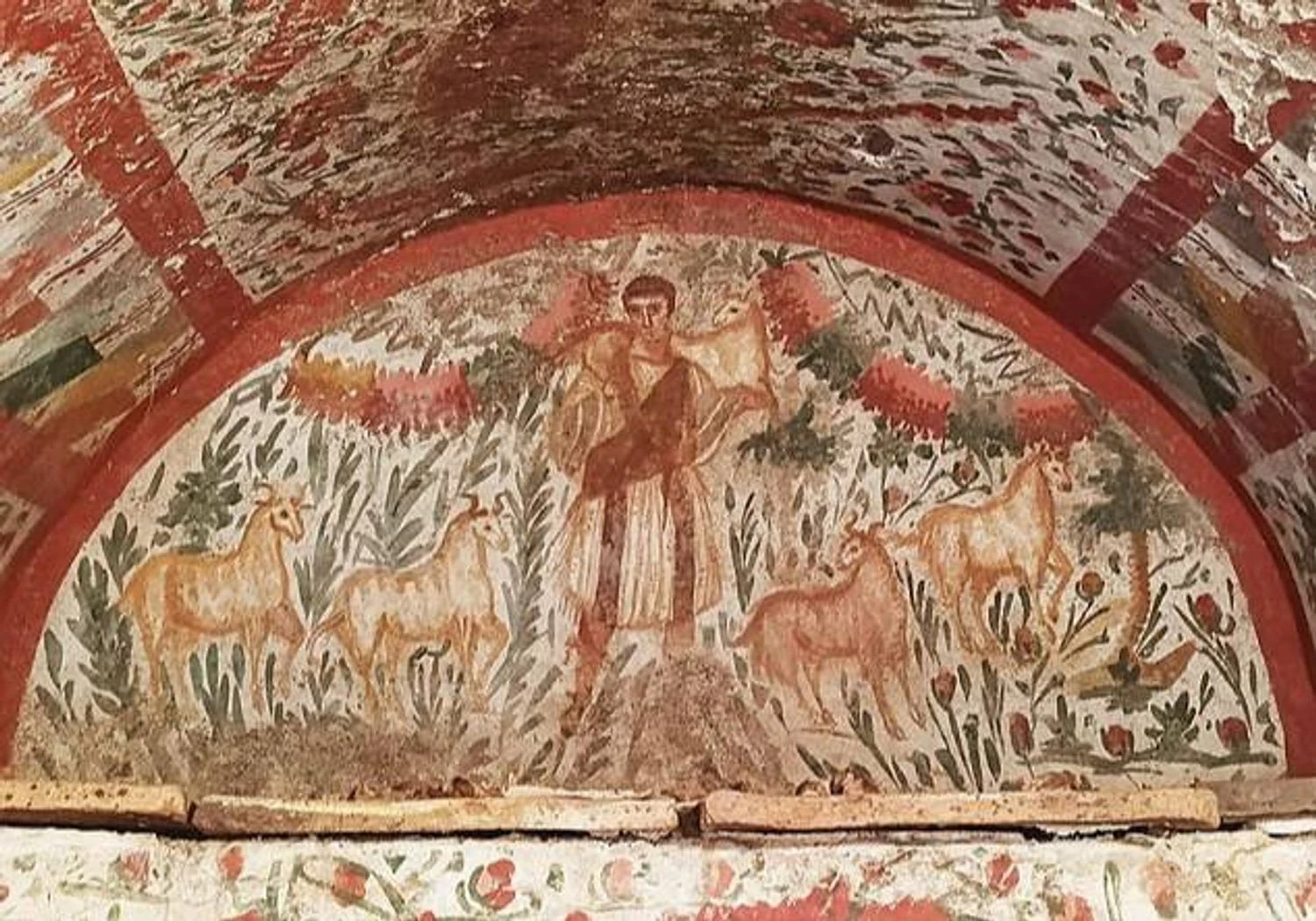
Turkish officials called the find exceptional, as it is the only known example of such early Christian art outside of Italy. It confirms that early Christians used the same images and titles for Jesus as in the New Testament. In particular, the motif of the Good Shepherd is evident.
It is noted that the fresco was found during excavations of the Hisardere necropolis in the Iznik district of Bursa – one of the largest ancient burial complexes in the region. The necropolis dates back to the 2nd-5th centuries AD and contains various types of burials: chamber tombs with terracotta roofs, massive stone sarcophagi, cist graves made of vertical slabs, and spacious underground hypogea.
Along the northern wall of the tomb, a raised platform of terracotta slabs has been preserved, on which the bodies of the deceased were placed. Immediately behind it is the rare "Good Shepherd" fresco.
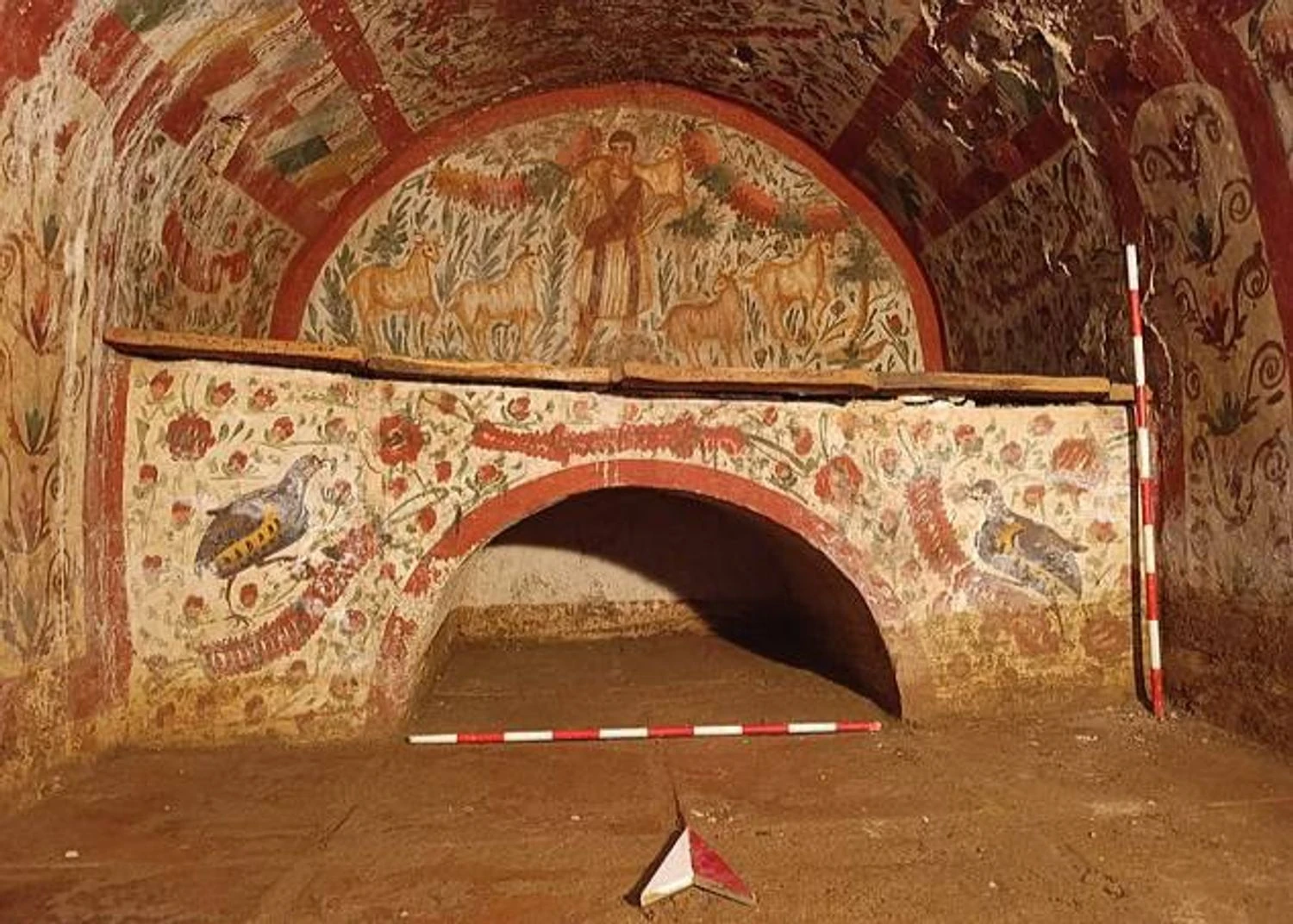
The tomb itself was built during a period when the region was known as Anatolia. Three walls and the ceiling, also adorned with wall paintings, have survived to this day.
A distinctive feature of the burial is the presence of human figures, which is atypical for local funerary art. The western wall depicts a man and a woman – likely the owners of the tomb, presented as a wealthy couple. Their high social status is emphasized by their clothing and jewelry.
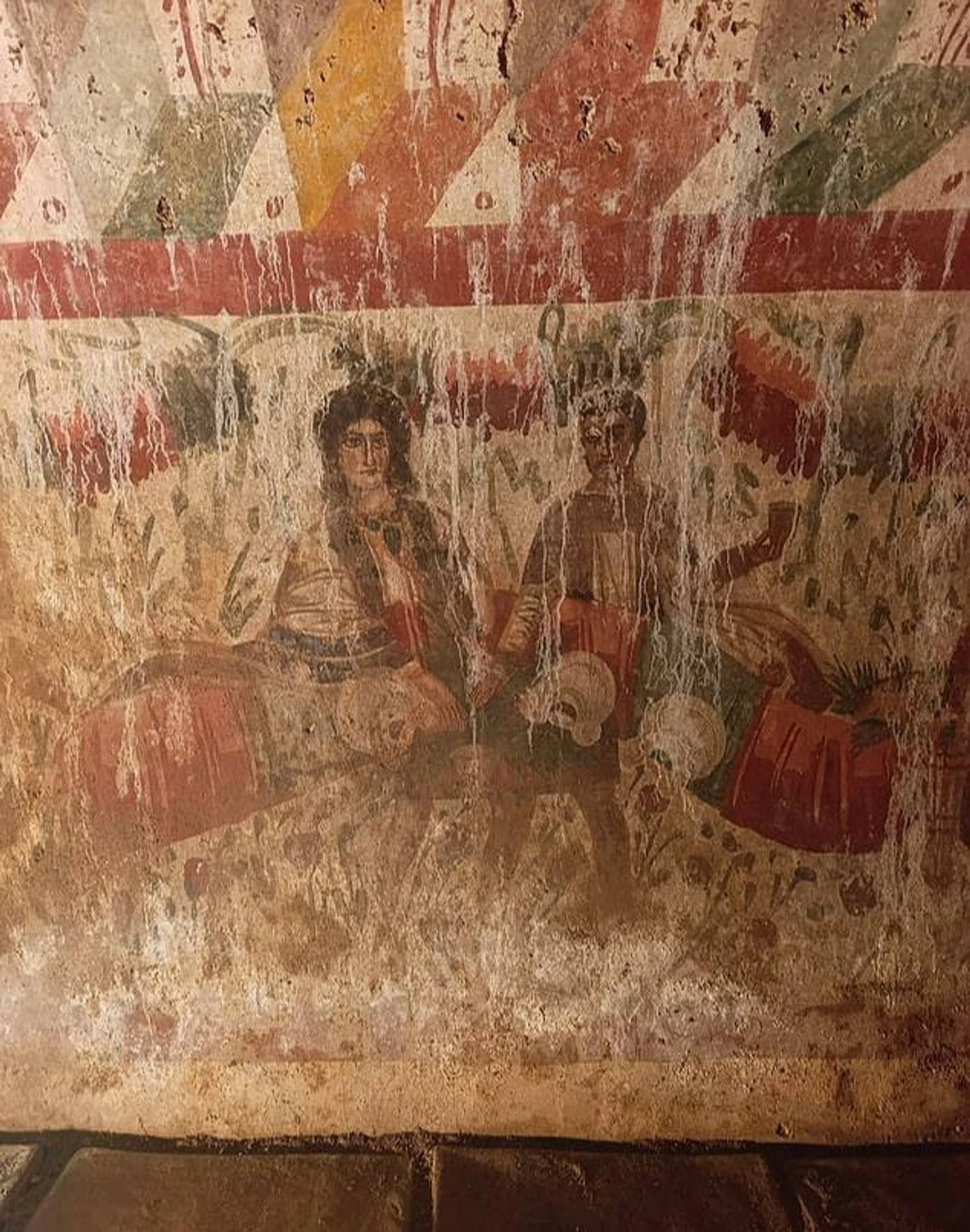
Despite the Christian nature of the tomb, neighboring scenes retain pagan motifs, where the afterlife is presented as an endless celebration.
Before the cross became the main symbol of Christianity, early believers often turned to the image of the Good Shepherd. The figure of Jesus with an animal on his shoulders symbolized care, salvation, and spiritual guidance at a time when overt religious symbolism was still rare.
Experts believe that this fresco reflects a transitional stage from pagan beliefs to Christian ones in the region.
According to archaeologists, the discovery is of great importance for the study of early Christian iconography, Roman-era burial traditions, and the spread of Christianity in Anatolia. It also confirms Iznik's role as an important spiritual and historical center, as it was here in 325 that the First Council of Nicaea took place, laying the foundations of Christian doctrine.
Researchers hope that further excavations in the Hisardere necropolis will reveal new frescoes, inscriptions, or artifacts that will help to understand more deeply the multicultural and religious history of ancient Nicaea.
Recall
Archaeologists found rare life-size frescoes in Pompeii depicting secret initiation rites to Dionysus. The find dates back to 40-30 BC and contains scenes of ritual ecstasy, dancing, and hunting.
Fresco with unusual Islamic element found in church in Italy: artifact confirms Islamic influence in medieval Christian churches02.02.25, 18:54 • 111855 views