





















Poland will denounce the Ottawa Convention from February 20, 2026, to produce anti-personnel mines for border protection. The decision is part of the "Eastern Shield" strategy due to Russian aggression and the experience of the war in Ukraine.
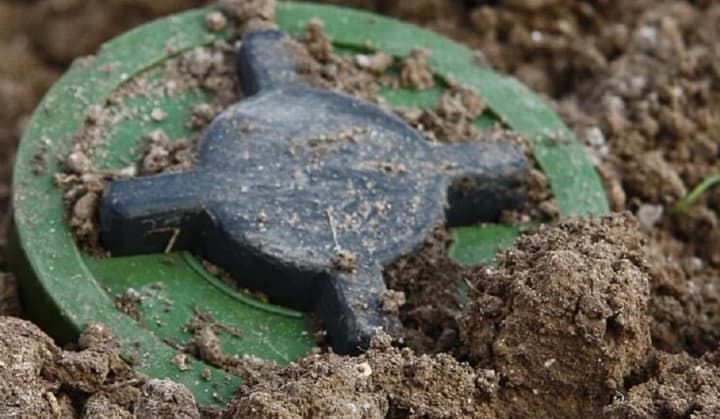
The Polish government is completing the procedure for denouncing the Ottawa Convention, which will allow the country to legally produce, accumulate, and use anti-personnel mines to protect its borders starting from February 20, 2026. This was reported by "Polskie Radio," writes UNN.
Details
The decision became part of the large-scale "Eastern Shield" strategy, aimed at creating powerful defensive lines on the border with Russia and Belarus. Warsaw emphasizes that in the face of growing aggression from the Kremlin, adherence to humanitarian restrictions creates a dangerous military asymmetry that must be eliminated to ensure national security.
The experience of the war in Ukraine as a key argument for Warsaw
Joanna Kluzik-Rostkowska, Deputy Head of the parliamentary National Defense Commission, noted that the effectiveness of minefields during Russia's full-scale invasion of Ukraine was a decisive factor for Polish lawmakers.
Lithuania officially withdrew from the Convention on the Prohibition of Anti-Personnel Mines27.12.25, 11:48 • 6626 views
According to her, at the beginning of the great war, the use of millions of mines helped to contain the rapid advance of Russian columns, which proved the indispensability of this type of weapon for defensive operations. Poland aims to have its own stocks of certified mines instead of facing only enemy minefields on its own land in the event of a conflict.
At the beginning of the invasion, the Ukrainians used almost three million anti-personnel mines on the border, which significantly delayed the Russians. It just turned out that these mines were needed. It was clear that in the event of any conflict, anti-personnel mines would still appear on Polish territory. The only question was whether they would be Russian mines or also our own
— emphasized Joanna Kluzik-Rostkowska.
Formation of a "mine belt" on NATO's eastern flank
Poland joins the regional "trend" of withdrawing from the Ottawa Convention, which was previously supported by the Baltic states and Finland. Estonia, Latvia, and Lithuania finalized their withdrawal at the end of 2025, and Finland completed this process in January 2026, which effectively means the creation of a single chain of mined defensive lines from the Baltic to the Arctic.
Finland officially withdrew from the Ottawa Convention on the Prohibition of Anti-Personnel Mines10.01.26, 19:57 • 7441 view
The Polish military leadership has already announced the search for suppliers for the mass production of new generation mines, including remote mining systems using drones, which should become a critical element of deterrence on the Alliance's eastern borders.
Poland to resume production of anti-personnel mines to protect its eastern border and for possible export to Ukraine17.12.25, 17:47 • 4817 views