























The volume of Russian crude oil on tankers at sea has increased by 60 million barrels since late August due to reduced purchases by India. Russia is seeking alternative markets and using storage in Southeast Asia.
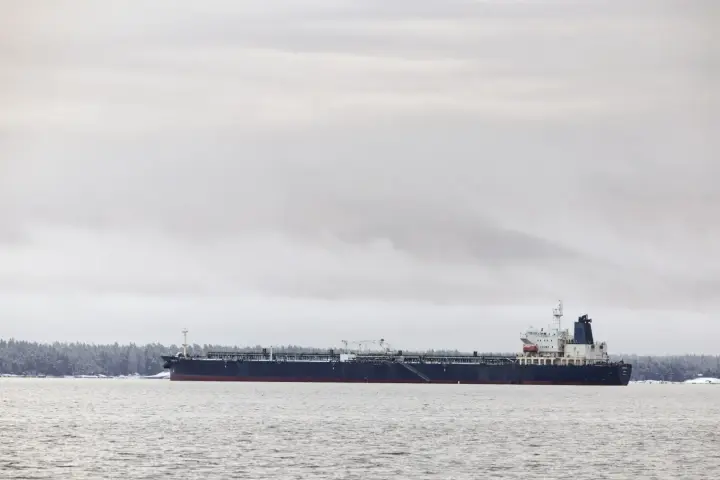
The volume of Russian crude oil on tankers at sea has increased by 60 million barrels since the end of August last year. The main reason for the overstocking was a sharp decrease in purchases by Indian oil refineries, which forces Moscow to look for alternative markets or use storage tanks in Southeast Asia. This is reported by Bloomberg, writes UNN.
Details
Russian oil supplies to Indian ports fell to 1.12 million barrels per day during the first 25 days of January, the lowest figure in three years. The drop in demand coincided with the entry into force of the European Union's ban on imports of petroleum products made from Russian raw materials. Due to the refusal of Indian enterprises to accept cargo, dozens of tankers are currently idle at anchor off the coast of India and Oman.
Oil prices soar 3% on US 'armada' and new sanctions against Iran24.01.26, 05:49 • 8375 views
The total volume of oil stored on vessels stabilized at 140 million barrels. To minimize downtime, Russian exporters began unloading part of the cargo in Indonesian storage facilities, particularly in Karimun and on the islands of Borneo and Java.
Increased sanctions pressure on the shadow fleet
The European Union and the United Kingdom have intensified measures against vessels transporting Russian oil in circumvention of restrictions. Last Thursday, the French navy detained the tanker Grinch in the Mediterranean Sea. This incident forced other vessels sailing from Russian ports to urgently change course. In particular, two tankers that left Murmansk turned back to the Arctic a few hours after the Grinch was seized.
Russia loses influence in the South Caucasus due to "Trump's route" – intelligence26.01.26, 15:13 • 5056 views
Despite logistical difficulties, Russia increased its average daily sea shipments to 3.34 million barrels in the week ending January 25. This growth was mainly due to increased shipments through the Baltic ports of Ust-Luga and Primorsk.
Export value and price indicators
The gross value of Russian sea exports at the end of January exceeded $1 billion per week for the first time in five weeks. This was facilitated by a slight increase in prices for major oil grades. In particular, the price of Urals in the Baltic region rose to $38.44 per barrel, and in the Black Sea region – to $35.98. The most expensive remains the Pacific grade ESPO, whose average cost reached $47.43 per barrel.
Mediterranean Incident: Sanctioned Russian Tanker "Progress" Loses Control23.01.26, 23:55 • 4823 views