



















In Washington, the idea of creating a new Core 5 group (USA, China, India, Japan, and Russia) was discussed, which would bring traditional adversaries closer together. The White House categorically denies the existence of a document about Core 5, but experts consider it expedient for the current administration.
This week in Washington, the "seemingly utterly improbable idea of the US creating a new group of countries, Core 5 (C5), which would include China and Russia, bringing traditional adversaries closer and creating a sharp contrast with the existing G7," was discussed, Politico reports, writes UNN.
Details
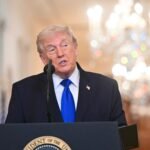
While it once might have seemed unrealistic, some observers noted that there was something "Trumpian" about it. Firstly, President Donald Trump often sought to make deals with rival countries – for example, he approved the sale of Nvidia H200 artificial intelligence chips to Beijing and sent his envoys Steve Witkoff and Jared Kushner for direct negotiations in Moscow with Kremlin head Vladimir Putin, the publication notes.
A person who worked in the White House during the first Trump administration said that the idea of Core 5 (USA, China, India, Japan, and Russia) is not entirely unexpected.
"Nothing related to C5 or C7 was discussed, but there were certainly conversations about existing bodies, such as G structures or the UN Security Council, not being fit for purpose given the emergence of new players," the source said.
The idea of creating the group reportedly emerged in a longer, unpublished version of the US National Security Strategy, which the White House released last week. It is stated that the publication could not confirm the existence of the longer plan (which was reported by Defense One).
As Defense One notes, the "national security strategy proposes to take… a step by creating a new body of great powers that will not be limited by the G7's requirements that countries be both wealthy and democratically governed." "The strategy proposes a 'Core Five,' or C5, consisting of the United States, China, Russia, India, and Japan – several countries with populations over 100 million. It would meet regularly, like the G7, at summits on specific topics. The first on the proposed C5 agenda: security in the Middle East, specifically the normalization of relations between Israel and Saudi Arabia," the publication writes.
The White House, according to Politico, categorically denies the existence of this document, and press secretary Hannah Kelly wrote in a comment: "No alternative, private, or secret version" of the 33-page official plan exists.
However, national security experts said that the creation of the C5 could be appropriate for the current White House, the publication writes.
"This is consistent with how we believe President Trump views the world, which is non-ideological, through a sympathy for strong players, and through a tendency to cooperate with other great powers that maintain spheres of influence in their region," said Torrey Taussig, who served as director for European affairs on the US National Security Council during the Biden administration.
She noted that Europe does not feature in the theoretical C5, "which, I guess, would make Europeans believe that this administration views Russia as a leading power capable of exercising its sphere of influence in Europe."
Michael Sobolik, an aide to US Republican Senator Ted Cruz during the first Trump administration, viewed the C5 as a departure from Trump's China policy in his first term as president.
"The first Trump administration adhered to the concept of great power competition, and that's how we framed and discussed relations with China," he said. "This is just a huge departure from that."
But the administration has previously considered new power configurations, the publication notes. Pentagon chief Pete Hegseth mentioned the historic "G2 meeting" between Trump and Chinese President Xi Jinping in November, "which caused alarm in Congress." The US National Security Strategy itself, it is noted, "marked a departure from traditional European allies, who, it said, faced 'civilizational erasure,' and a shift to a new focus on the Western Hemisphere."
US House Representative Democrat Raja Krishnamoorthi, a senior member of the House Select Committee on China, wrote to Hegseth, expressing "deep concern," stating: "Your description of the US relationship with the CCP as 'G2' is deeply concerning and indicates a fundamental misinterpretation of the United States' primary global adversary, risking dangerously undermining the Pentagon's preparations to deter conflict in the Indo-Pacific."
"EU unity contradicts US interests": EU Commissioner points to Washington's geopolitical game after publication of new security strategy10.12.25, 17:05 • 2992 views