







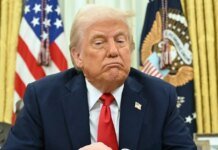

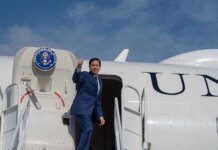

U.S. President Donald Trump is seeking a triumph from regime change in Cuba that he did not achieve in Iran. However, any move toward even greater action by the overstretched U.S. military would involve high political and military risks, CNN reports, according to UNN.
Details
The U.S. government's indictment of 94-year-old former Cuban President Raul Castro for murder and conspiracy to murder U.S. citizens is a landmark turn in America's nearly 70-year standoff with the communist island.
Trump and Rubio's escalating rhetoric show a Cuba invasion could be imminent – Axios12.05.26, 14:58 • 2726 views
Wednesday's indictment, issued on Cuba's Independence Day, is also a significant escalatory step proposed by Trump. It coincides with a U.S. oil blockade that has caused a severe humanitarian crisis and threatens the collapse of Cuban society; ever-increasing diplomatic pressure; and a recent list of demands delivered in Havana by CIA Director John Ratcliffe, the publication writes.
CIA Director delivered a message from Trump to Cuba – Reuters15.05.26, 13:05 • 3620 views
Trump has been threatening Cuba for weeks, saying he can do "anything" he wants with the impoverished nation and could have the "honor of taking over Cuba." On Wednesday, he declared he was "liberating" the country.
"It's a failing country. You see it. It's falling apart. They have no oil, they have no money," Trump told reporters. "But we're here to help — we're here to help the families, the people."
The indictment of Castro regarding the 1996 shootdown of two civilian aircraft, which killed four people including three Americans, appears to be a double game by the administration, the publication notes. Trump may hope to further aggravate the situation in Havana, possibly by displacing weaker or more pragmatic members who might be willing to negotiate, the publication points out. But a new front in the legal sphere could also serve as a pretext for military action or a special forces raid similar to the one that toppled Venezuelan President Nicolás Maduro in January, the publication writes.
Leah Schlenker, a research fellow at the Quincy Institute for Responsible Statecraft, warned that the U.S. Department of Justice indictment unsealed in Florida could backfire on the White House if it is aimed at extracting concessions from Cuba. "I think it will be a death sentence for any potential deal with Cuba," Schlenker said.
"It will lead to a rally-around-the-flag effect and reinforce the siege mentality of the Cuban leadership," she added.
The Cuban gambit is another test of the administration's strategy of increasing economic pressure by imposing blockades while raising the prospect of using force to compel enemies to capitulate. This worked in Venezuela and helped identify Delcy Rodríguez, a high-ranking regime official who became acting president and is cooperating with Trump's team. But Venezuelans have yet to see their hopes for democracy fulfilled. A similar approach failed so significantly in Iran that Trump may have no choice but to resume war
— the publication states.
Cuban President Miguel Díaz-Canel criticized the indictment as a political maneuver demonstrating the "arrogance and frustration" of the U.S. empire. His country's defiance challenges a fundamental belief of Trump's foreign policy: that every situation is a deal waiting to happen, and that the possibility of violent U.S. action against smaller adversaries can lead them to surrender and open their borders, real estate, and raw materials to American firms, the publication writes.
To be continued…