



















Google rolls out redesigned Quick Share app for Windows
Google has redesigned the Quick Share application for Windows, following an earlier overhaul of the Android version. Android Authority identified the changes, which include...

Ripple continues $4B acquisition spree with Palisade deal
Ripple, a crypto services company, announced on Monday its acquisition of Palisade, a crypto wallet and custody firm, to enhance institutional offerings by integrating...

EU launches €107M RAISE virtual institute to accelerate AI-driven science
The European Commission has launched the pilot phase of a new virtual institute, “RAISE – the Resource for Artificial Intelligence Science in Europe,” to...

Anthropic study reveals AIs can’t reliably explain their own thoughts
If you ask a large language model (LLM) to explain its own reasoning, it will happily give you an answer. The problem is, it’s...
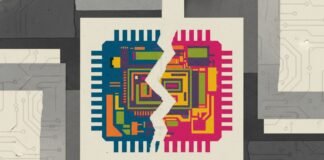
Tech News Today: AMD’s critical CPU flaw and iOS 26.1 offerings
Tech News Today exposes the deep friction between relentless innovation and its messy consequences. We have a critical security flaw in brand new...

Step-by-step guide building a multiplayer browser game using Node.js
If you think about how online multiplayer games work, and also see games like agar.io and slither.io allow Players from around the world to...

Apple’s Pico-Banana-400K dataset could redefine how AI learns to edit images
Apple has released Pico-Banana-400K, a massive, high-quality dataset of nearly 400,000 image editing examples. The new dataset, detailed in an academic paper posted on...

AMD confirms critical RDSEED flaw in Zen 5 CPUs
AMD has confirmed a high-severity security vulnerability in the RDSEED instruction on its Zen 5-based CPUs, labeled AMD-SB-7055, which generates potentially predictable cryptographic keys....

Google pulls Gemma AI after senator says it fabricated a rape...
Google announced it has removed its Gemma AI model from its AI Studio platform after receiving a letter from U.S. Senator Marsha Blackburn accusing...

China’s first atomic quantum computer goes commercial with $5.6M in orders
China’s first atomic quantum computer, Hanyuan No. 1, has achieved commercial viability after securing more than 40 million yuan ($5.6 million) in orders from...
Recent Posts

Как выбрать экономный электронный испаритель? Простые рекомендации для новичков
Выбор устройства для парения — это всегда поиск баланса между качеством, удобством и финансовой выгодой. Переход с одноразок на многоразовые девайсы позволяет в некоторых...

¿Dónde encuentro una notaría pública en Manhattan?
Cuando una persona busca una notaría en New York, generalmente necesita resolver un trámite importante de forma rápida y segura. Ya sea para autenticar...
¿Por qué USCIS no acepta mis propias traducciones si yo soy bilingüe?
En procesos donde se requieren traducciones, especialmente ante USCIS, muchas personas cometen el mismo error: traducir sus documentos por cuenta propia pensando que eso...
¿Si me caso por lo civil hoy, cuándo puedo meter los papeles de la...
La boda civil en New York no solo representa una unión legal, sino también el inicio de un posible camino hacia la residencia permanente...
¿Puedo casarme si no tengo papeles o seguro social?
El Matrimonio civil en New York está disponible para cualquier pareja que cumpla con los requisitos básicos establecidos por el estado, sin importar si...