

















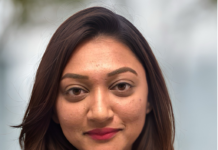
Tse Hao Guang
- Tse Hao Guang is a researcher and writer in Singapore.
- He started a side project publishing literary pamphlets that spotlight emerging writers' works.
- He wanted to show that a creative venture does not have to bleed money.
This as-told-to essay is based on a conversation with Tse Hao Guang, a 38-year-old researcher and writer based in Singapore. It has been edited for length and clarity.
I started a creative publishing project to spotlight emerging writers, with the goal of not losing money doing it.
My journey in literature began when I was young, traveling to meet my dad's side of the family in suburban Canada during the holidays. There was nothing to do, and I'd beg my uncle to drive all the way to the library, 20 minutes away, and borrow huge stacks of books.
Since 2015, I've published two books of my own and edited several anthologies.
It's very, very rare that you can survive just by writing books. When I was a freelance writer, I taught writing workshops at schools and universities and did copywriting gigs. It tired me out, because client writing and creative writing used similar parts of my brain.
Now, I work full time as a strategic foresight researcher. Earning a stable salary has removed the pressure to make money from my writing, allowing me to pursue many creative projects.
One of those projects is Paper Jam, an annual publication that spotlights Singaporean writers.
Starting Paper Jam
The big gap I saw for emerging writers was that when they want to showcase their work, there are only a few avenues.
They can either publish in a journal alongside many other writers, so it's not their solo work, or amass enough stories to create their own manuscript, which has a much higher bar to entry. They would also need to print up to 1,000 copies for their first run, which is tricky to manage financially and inventory-wise.
I noticed that Singapore didn't have a flourishing independent zine culture like other countries do.
So I came up with the idea for Paper Jam, a literary pamphlets publishing venture. I received funding from Sing Lit Station, a Singapore-based nonprofit that supports local writers, and launched in 2024.
Limited copies for exclusivity
Aditi Bharade
The idea was that I'd pick three writers each year via an open call on Instagram, and each would write a 28-page pamphlet. For the last two years, I've put out the open call in November.
While editing, I tend to over-suggest, giving them many edits. I expect them to push back and encourage them to disagree with me until we find a middle ground.
I decided to print only 100 copies each of the threeA5-sized pamphlets and not reprint if they went out of stock. The idea is that a pamphlet isn't meant to stay forever. The appeal of it is that it's a limited edition, something they might not be able to buy again.
Then in September, I sell the pamphlets at bookstores in Singapore and at literary events.
Won't lose you money
Aditi Bharade
From the start, I set a constraint on myself — the business may not make me a lot of money, but it shouldn't cost me any. And so far, we have been successful in that.
In 2024, I priced the 300 pamphlets at SG$16 each, and in 2025, I raised the price to SG$18. The cost of producing, without design and labor costs, is roughly SG$2,000 to SG$3,000.
The past two years, we've about broken even. Last year, we earned a bit more, and I've used that money to hire an intern to help me with this year's run.
If you think about this project as a way to earn extra money, it doesn't work. You can earn a lot more easily by doing other things.
But I see it as a success that we don't lose money. It's not a vanity project where you spend too much, and the readership is too low.
Paper Jam's intent has always been to publish works that would not have seen the light of day otherwise. That's been the value of it to me, so I see it as a success.
Read the original article on Business Insider